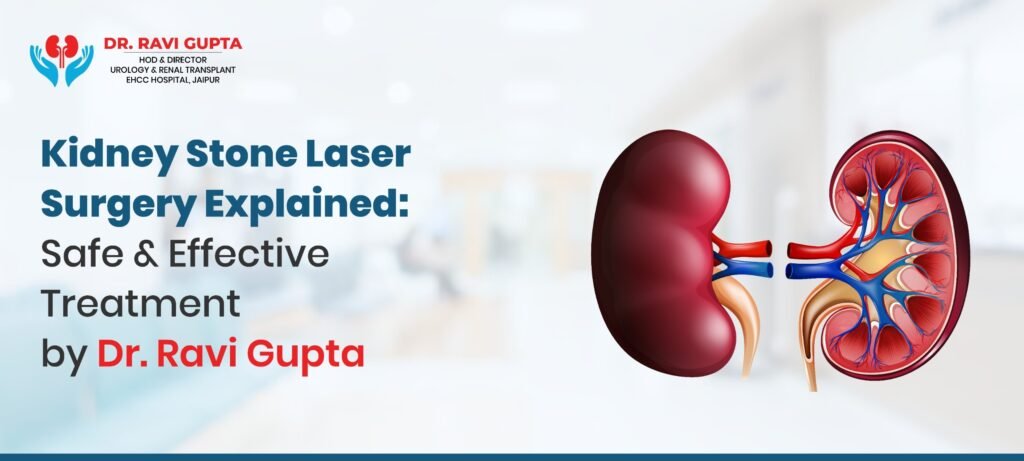
Kidney Stone Laser Surgery Explained: Safe & Effective Treatment by Dr. Ravi Gupta
Kidney stones are a health complication that is prevalent among individuals of any age. They may result in acute pain and make life in the day to day very uncomfortable. The thought of surgery scares away many patients, however, with new advances in medical technology, it has become very safe and easy to treat kidney stones than it was before. Kidney stone laser surgery is one of such advanced techniques.
Laser surgery on kidney stones is a new method of treatment which is less invasive, and does not involve any incision on the body. It is safe, effective and is commonly used nowadays. The patients tend to heal much quicker and experience a decreased amount of pain in contrast to the conventional surgical techniques.
Dr. Ravi Gupta, a leading urologist in Jaipur, is the one, who has introduced safe and advanced treatment of kidney stones with the help of laser technology. Kidney stones can be long-term relieved with laser surgery when the right diagnosis is made, right planning is put in place and the care of the patient is expertly done.
The kidney stone laser surgery is described in very simple words in this article. You will be taught the definition of kidney stones, the reasons they are painful, their diagnosis, the mechanism of laser surgery, the post-surgery appearance, and how to avoid kidney stones in future. It is aimed to make the patients feel informed, confident, and less worried.
About Kidney Stones
What Are Kidney Stones?
Kidney stones are very tough crystal-like objects, which develop within the kidney. They are formed when it is the urine, which contains minerals and salts and is stuck together and solidified. Usually, urine helps in eliminating these minerals in the body. However, the presence of less water in the urine may result in the formation of stones.
Kidney stones are of various kinds
• Far the most common form is the calcium stones.
• Uric acid stones which are commonly diet related.
• Related to infections, struvite stones.
• Cystine stones, which are due to an uncommon disease.
Kidney stones also create discomfort when they are propelled or they obstruct the flow of urine. The acute edges of the stone irritate the urinary tract as a result of which acute discomfort appears.
Common Symptoms
The symptoms of kidney stones may be of sudden onset. Common signs include:
• Pain on the side or back, extreme.
• Radiating pains at the back to the groin.
• Burning during urination.
• Blood in the urine and it becomes pink or red.
• Nausea or vomiting.
Infrequently, some small stones can remain without symptoms, and in most cases, large stones can result in a great deal of pain.
Causes & Risk Factors
Many causes can result in the development of kidney stones which include:
• Drinking very little water.
• Consuming excessive salty or processed food.
• Kidney stones in the family history.
• Being overweight or obese.
• Some medical disorders such as gout or bowel diseases.
These causes are useful in treatment and prevention understanding.
Diagnosis: How Doctors Confirm Kidney Stones
Medical History Analysis
The physician then pays attention to the patient. This includes:
• Knowing the nature and the site of pain.
• Inquiry about the history of kidney stone issues.
• Knowledge of diet, water intake and lifestyle.
This data is utilized in guiding further tests.
Tests Used for Diagnosis
To be sure that kidney stones are present, doctors perform the following tests:
• Ultrasound – painless and safe scan.
• The most accurate is CT scan.
• KUB X-ray, not useful with all types of stones.
• Blood tests and urine tests, to determine infection or mineral concentrations.
These tests are used to determine the size, place and type of stone.
What Is Kidney Stone Laser Surgery?
Explained in Simple Terms
Laser lithotripsy is also referred to as kidney stone laser surgery. In this procedure, a slender tube having a camera is inserted into the urinary system. The stone is then cut into small bits by means of a laser.
There are:
• No cuts
• No stitches
• No open surgery
The fragments of stones are either expelled or discharged naturally using urine.
When Laser Surgery Is Recommended
Laser surgery is recommended in case of:
• Stones are larger than 6 mm.
• Stones produce blockage or infection of urine.
• The pain is chronic and acute.
• Stones keep coming back.
The doctors resort to using laser surgery when there has been no success with medicines or passing with natural means.
Benefits of Laser Surgery
The advantages of laser surgery include:
• Faster recovery
• Very high success rate
• Minimal bleeding
• Appropriate to kidney and ureter stones
The majority of patients are sent home after a day.
Step-by-Step Procedure
Before Surgery
Before the procedure:
• Urine and blood tests are performed.
• Imaging scans are reviewed.
• Patient is requested to starve some hours.
• There is an explanation of instruction on anesthesia.
The healthcare staff makes sure that nothing goes wrong.
During Surgery
During the surgery:
• A narrow tube is passed through the urinary channel.
• Laser cuts the stone into fine particles.
• Stone fragments are removed.
• Temporary stent can be inserted in case of necessity.
The process may take 30–60 minutes.
After Surgery
After surgery:
• Patients are followed up over a period of few hours.
• Mild pain or burning can be experienced.
• Urine can be a little bloody in the short run.
The majority of patients may be discharged on the same or the following day.
Recovery, Aftercare & Patient Guidance
What Recovery Looks Like
Recovery is usually quick:
• Normal routine in 2–3 days
• Full recovery within 1–2 weeks
The stone pain is relieved to the patients virtually instantly.
Do’s and Don’ts After Surgery
Do:
• Drink plenty of water
• Take medicines on time
• Again, follow-ups with the doctor
Don’t:
• Lift heavy objects
• Do not remove stents immediately
• Ignore fever or strong pain
Instructions are useful in preventing problems.
Possible Risks & Complications
Common Temporary Effects
There are short-term effects that can include:
• Harmless burning during urination.
• Light bleeding in urine.
• Frequent urge to urinate.
They normally disappear in several days.
Rare Complications
Uncommon complications can be:
• Infection
• Injury to the urinary tract
• Need for repeat treatment
The selection of a qualified physician decreases these hazards.
Prevention Tips for Future Kidney Stones
Diet Recommendations
To prevent stones:
• Drink enough water every day
• Eat less salt
• Limit red meat intake
• Limit the oxalate-rich foods such as spinach
Diet is a significant factor of prevention.
Lifestyle Changes
Helpful habits include:
• Eating at a healthy weight
• Avoiding sugary drinks
• Regular health check-ups
Minor alterations can have a major impact.
Cost of Kidney Stone Laser Surgery
The cost depends on:
• Stone size and location
• Hospital facilities
• Use of stent
• Type of anesthesia
The cost-effective, safe, and prolonged relief are guaranteed by the selection of a qualified specialist such as Dr. Ravi Gupta.
When to See a Doctor Immediately
Seek medical help if you have:
• Pain which is unusually severe and unremitting
• Fever or chills
• Heavy blood in urine
• Difficulty passing urine
Care at hand helps to avoid complications.
Conclusion
Laser surgery of kidney stones is a safe and effective procedure that brings quick relief with a minimum amount of pain. It does not involve open surgery and the patient can resume normal life soon. No severe issues, reduced pain, and timely treatment are achieved by early diagnosis.
Kidney stones can be treated effectively with adequate treatment, advice and prevention. Dr. patient-centred care and Ravi Gupta competencies allow making treatment safe and reassuring. Patients are not to wait to feel better and need to seek assistance as early as they experience the symptoms.