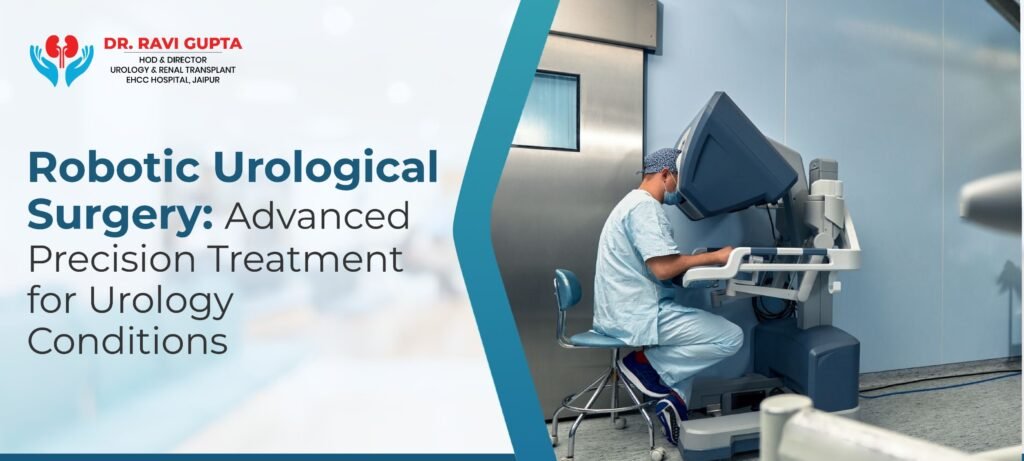
Robotic Urological Surgery: Advanced Precision Treatment for Urology Conditions
Medical technology is transforming the way physicians treat a wide range of health conditions, including urological problems. Urology focuses on diseases of the urinary system and the male reproductive organs. Over the past few years, the introduction of Robotic Urological Surgery has brought a major shift in how urological surgeries are performed.
Earlier, most urology surgeries involved large incisions, long hospital stays, and slow recovery. Today, both patients and doctors prefer minimally invasive procedures that cause less pain and allow faster healing. This growing demand has made robotic urology increasingly popular across the world, including among patients seeking an experienced urologist in Jaipur.
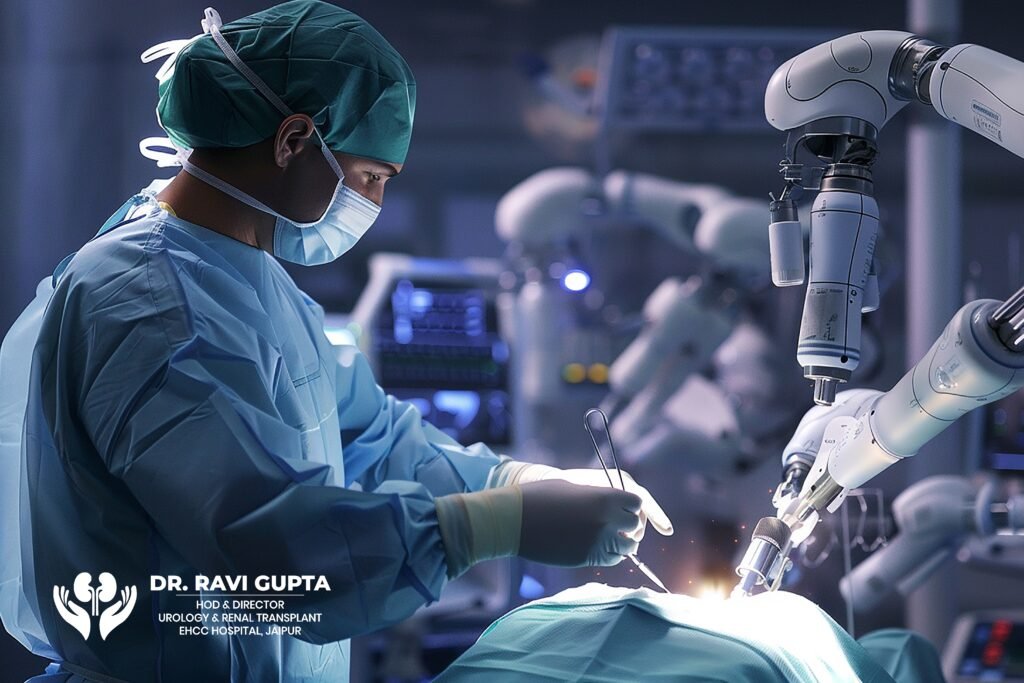
Robotic surgery does not mean that a robot operates on its own. It involves a highly advanced machine that is completely controlled by a skilled surgeon. The robotic system helps the surgeon perform procedures with greater precision, better control, and improved visibility.
Because of its safety, accuracy, and faster recovery outcomes, robotic urology is steadily becoming the gold standard for many complex urological surgeries worldwide, and is now widely recommended by leading specialists and urologists in Jaipur.
What Is Robotic Urology?
Robotic urology is a new technique in surgery, as urology procedures are done by the help of robotic machines controlled in every detail by a qualified urologist.
Comparison of Traditional Surgery, Laparoscopy and Robotic Surgery
- Traditional open surgery is characterized by large incisions, increased pain and increased recovery.
- Laparoscopic surgery requires small incisions with the use of a camera, limited movement, and vision.
- Two: Robotic surgery is better than laparoscopy in terms of control, clarity of vision and accuracy.
Role of Robotic Systems
- Surgeon- Surgical robots require a surgeon sitting at a console who controls the arm.
- These hands are holding surgical instruments and a camera.
- The robot tracks the movements of hands of the surgeon with utter precision.
The Improvement of Precision and Visualization
- 3D high-definition view assists surgeon to have a clear view of minute structures.
- Robotic arms work in a continuous and smooth way.
- This minimizes injuries to the surrounding nerves and tissues.
Definition of Robotic Urological Surgery?
Robotic urological surgery is a patient-friendly surgical technique used to treat various urological conditions by using small incisions and highly advanced instruments. This procedure begins with the administration of anesthesia to the patient, followed by making small keyhole cuts through which robotic instruments and a high-definition camera are inserted. The surgeon operates these instruments from a console, controlling every movement with great precision. The surgery is performed very accurately, and once completed, the lacerations are closed using only a few stitches.
In robotic urological surgery, the surgeon plays the most important role and makes all the decisions during the procedure. The robot does not function independently; it only follows the exact commands given by the surgeon. This ensures complete control remains in the surgeon’s hands at all times.
The procedure is known for its high level of safety and accuracy due to advanced safety systems, stable and precise hand movements, and better control in difficult or delicate areas, making it a reliable option for complex urological surgeries.
Robotic Urological Surgery Common Conditions
Robotic Surgery of Prostate Conditions
Robotic surgery is widely used in the treatment of various prostate conditions. In cases of prostate cancer, Robotic Radical Prostatectomy is performed, which involves the precise removal of the prostate gland while ensuring nerve protection. This helps in effective cancer treatment while preserving important functions.
Robotic surgery is also used for treating an enlarged prostate (BPH). This procedure helps improve the passage of urine and is associated with minimal bleeding, making it a safer and patient-friendly surgical option.
Robotic Kidney Surgery
Robotic kidney surgery is an advanced approach used for conditions such as kidney cancer and kidney tumors, including partial nephrectomy, where only the tumor is removed to preserve the kidney. Projected trends in kidney disease treatment suggest that next-generation technologies will provide enhanced opportunities to treat, repair, and restore kidney function. In cases where the kidney is presentable, robotic surgery helps in preserving healthy kidney tissue while ensuring precise and effective treatment outcomes.
Robotic Surgery to Bladder Disorders
Robotic surgery has brought a major advancement in the treatment of bladder disorders by offering greater precision, safety, and better outcomes for patients. It allows surgeons to perform complex procedures with enhanced accuracy, resulting in minimal tissue damage and faster recovery. This advanced approach is especially beneficial for delicate bladder surgeries where precision is extremely important.
In cases of bladder cancer, robotic surgery helps in the precise removal of cancerous tissue while preserving as much healthy tissue as possible. The high-definition 3D view and controlled robotic movements enable surgeons to operate with confidence, reducing complications and improving surgical results.
Reconstructive bladder surgery is another area where robotic technology plays a key role. It supports accurate reconstruction of the bladder, helping restore normal function and improve the patient’s quality of life. The technique ensures better alignment and reduced surgical trauma.
Overall, robotic surgery supports elimination and reconstruction with increased accuracy, making it a reliable and patient-friendly option for managing bladder disorders while maintaining a human-centered approach to care.
Other Urological Conditions
Ureteropelvic Junction (UPJ) Obstruction is a condition where the flow of urine from the kidney to the ureter becomes blocked. This obstruction can lead to kidney swelling, pain, infections, or reduced kidney function if not treated in time. Proper diagnosis and timely management are important to protect long-term kidney health.
Pelvic Organ Prolapse occurs when pelvic organs shift from their normal position due to weakened support muscles and tissues. This condition can cause discomfort, urinary problems, and a feeling of pressure in the pelvic area. Treatment depends on the severity and may include both non-surgical and surgical options to improve quality of life.
Diverse Reconstructive Urology cases involve advanced procedures to restore normal urinary function and anatomy. These cases may arise due to birth conditions, injuries, previous surgeries, or chronic urological problems. Reconstructive urology focuses on improving function, comfort, and overall patient well-being through customized treatment approaches.
Benefits of Robotic Urological Surgery
Robotic urological surgery offers several important benefits for patients, making it a preferred choice in many cases. One of the key advantages is the use of smaller incisions, which results in less blood loss during surgery and reduced pain after the procedure. Because the surgery is minimally invasive, patients often experience faster recovery and a shorter hospital stay, allowing them to return to their normal routine more quickly.
Another major benefit of robotic surgery is its greater accuracy, especially in preserving delicate perineal nerves. This precision plays a crucial role in improved urinary control after surgery and leads to better sexual function outcomes for many patients. With fewer complications and long-term consequences, these advantages make robotic urological surgery a major option among most patients.
Who Is an Ideal Candidate for Robotic Urological Surgery?
Robotic urological surgery is a highly advanced treatment option that can be used for many patients, but it may not be suitable for everyone. The decision to choose robotic surgery depends on the patient’s condition, overall health, and medical requirements.
Patients who are commonly eligible for robotic surgery include those diagnosed with prostate cancer, kidney tumors, and bladder disorders. It is also a preferred option for patients who require reconstructive urological surgery, as robotic techniques allow greater precision and faster recovery.
When considering robotic surgery, age is not the most important factor. A patient’s general health and wellbeing play a much bigger role. The patient should be medically stable and fit to undergo anesthesia, as robotic procedures require general anesthesia for safe and effective outcomes.
However, robotic surgery may not be recommended in certain cases. Patients with severe heart or lung diseases may not be suitable candidates. In addition, some patients with high medical risks or complex health conditions may be advised to opt for alternative treatment options.
The role of professional assessment is very important before proceeding with robotic surgery. An experienced urologist carefully evaluates the patient’s complete medical history, the stage of the disease, and overall health condition. Based on this detailed assessment, the urologist recommends the best and safest treatment option for the patient.
Robotic Urological Surgery vs Traditional Surgery
Comparison Table
| Feature | Open Surgery | Laparoscopic Surgery | Robotic Surgery |
| Incisions | Large | Small | Very small |
| Pain | High | Moderate | Low |
| Blood Loss | More | Less | Minimal |
| Recovery Time | Long | Medium | Fast |
| Accuracy | Limited | Better | Very high |
| Hospital Stay | Long | Shorter | Very short |
The Post-robotic urological surgery recovery
Post-robotic urological surgery recovery is generally fast and far more comfortable compared to traditional open operations. Most patients experience minimal discomfort and are able to resume their routine in a short time. The hospital stay is usually between 1 to 3 days, depending on the procedure and overall health condition. Pain after surgery is typically mild and can be easily controlled with prescribed medicines, allowing patients to move and rest comfortably.
Returning to everyday activities such as walking, light work, and normal household tasks usually takes around 2 to 4 weeks, with gradual improvement in strength and energy levels. Regular post-treatment check-ups are important to monitor healing, ensure there are no complications, and assess overall progress. In most cases, the long-term outcomes are very positive, with excellent recovery and improved quality of life for patients.
Safety, Risks and Success Rates
Robotic urological surgery is considered extremely safe and is widely trusted by patients and healthcare professionals. It has an overall strong safety profile, with low complication rates and high levels of patient satisfaction reported across different healthcare settings.
Although complications are uncommon, some possible risks do exist. These are rare and may include infection, bleeding, or temporary urinary issues, which are usually manageable with proper medical care and follow-up.
The experience of the surgeon plays a very important role in the outcome of robotic surgery. Greater experience enhances performance, and talented, well-trained surgeons are able to minimize risks and handle complex situations more effectively.
On a global level, robotic urological surgery shows good success rates. Patients often experience positive results in terms of cancer control and recovery, with serious long-term problems being rare.
Why Select a Reflective Robotic Urologist?
The surgeon plays a very key role in the success of robotic surgery, as their skill and experience directly influence surgical precision, patient safety, and overall outcomes. The development of specialized training is necessary to ensure surgeons are fully competent in operating advanced robotic systems, while robotic surgery certifications further validate their expertise and adherence to high professional standards.
Handling complex cases also requires a high level of technical knowledge and clinical judgment, which is best supported by high-level hospital technology and modern surgical infrastructure. A urologist who works with robots therefore has a higher probability of performing safer surgeries and achieving positive outcomes for patients.
Price of Robotic Urological Surgery
General Cost Factors
General cost factors in medical treatment largely depend on the type of surgery being performed, as different procedures require varying levels of complexity, time, and resources. Hospital facilities also play an important role, since advanced infrastructure, technology, and quality of care can significantly influence overall expenses. In addition, surgeon expertise is a key factor, as highly experienced and specialized surgeons may charge more due to their skills and proven track record of successful outcomes.
Insurance Coverage
Insurance coverage for robotic surgery is generally available, as most insurance providers include it within their approved treatment options. However, the extent of coverage shall be based on the specific policy terms and conditions, including the type of procedure, hospital network, and other applicable requirements set by the insurer.
Long-Term Cost Benefits
Long-term cost benefits of robotic surgery include shorter hospital stays, which reduce accommodation and care expenses, and a faster return to work, allowing patients to resume normal income and daily activities sooner. It also results in fewer complications, lowering the need for additional treatments or readmissions. Overall, robotic surgery is long-term cost-effective. Although it may appear expensive initially, it is affordable in the long term due to these sustained financial and health benefits.
Conclusion
Urology robotic surgery has transformed the future of urology treatment. It is very accurate, safer, quicker to recover and has a better quality of life to the patients. Complex urology conditions can now be ameliorated with sophisticated technology and competent surgeons.
In case you or your loved one is struggling with a urological issue, then visit a skilled robotic urologist and then decide on the most suitable course of treatment. Educated choices will result in a healthy and happy existence.
Frequently Asked Questions (FAQs)
1. Is robotic urethral surgery safe?
Yes. Robotic urethral surgery is considered very safe when performed by a trained and experienced urologist. The robotic system allows high precision, which helps reduce complications and improves surgical accuracy.
2. Is open surgery better than robotic surgery?
In most cases, robotic surgery is preferred over open surgery. It usually causes less pain, involves smaller incisions, leads to minimal blood loss, and allows faster recovery compared to traditional open surgery.
3. How long does robotic urology surgery take?
The duration of robotic urology surgery generally ranges between 2 to 4 hours, depending on the type and complexity of the procedure.
4. Does the robot perform the surgery on its own?
No. The robot does not act independently. Every movement of the robotic instruments is fully controlled by the surgeon, ensuring complete safety and precision during the procedure.
5. How soon can I return to work after robotic surgery?
Most patients can return to their normal work routine within 2 to 4 weeks, depending on their recovery and the nature of their job.